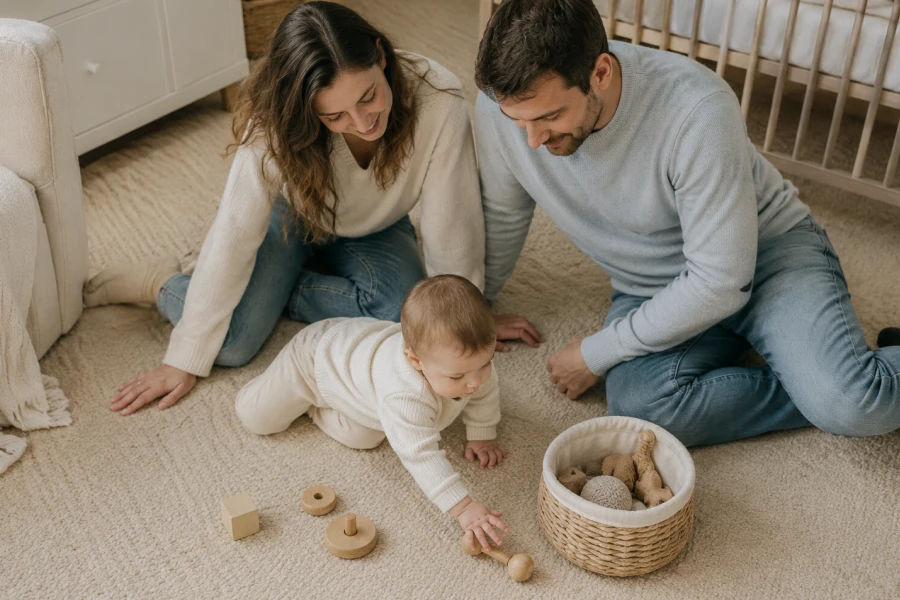
Budget friendly baby toys can still feel delightful, thoughtful, and developmentally rich. Babies do not judge price tags. They judge texture, sound, color, movement, and attention. Parents often discover that simple toys become favorites. A soft ball may outlast a flashy gadget. A cloth book may calm many afternoons. Smart choices help families protect money without cutting joy. Play depends more on engagement than expense. Wonder grows through repetition and surprise. Babies thrive when parents choose with purpose.
Developmental value comes from interaction. Babies learn when they reach, grasp, listen, and respond. A toy should invite action. It does not need complex features. Parents can find developmental play on a budget with simple materials. Blocks support motor skills. Rattles encourage cause and effect. Soft books build early language moments. Caregiver participation deepens every benefit. Low cost can still mean high value.
Buying carefully keeps the play area manageable. Babies can feel overwhelmed by too many choices. A smaller selection encourages focus. Parents also spend less time cleaning. Clear bins can help. Rotating toys adds variety without constant shopping. A practical toy budgeting habit keeps purchases intentional. Families can set monthly limits. They can also plan for birthdays and holidays. Less clutter often creates better play.
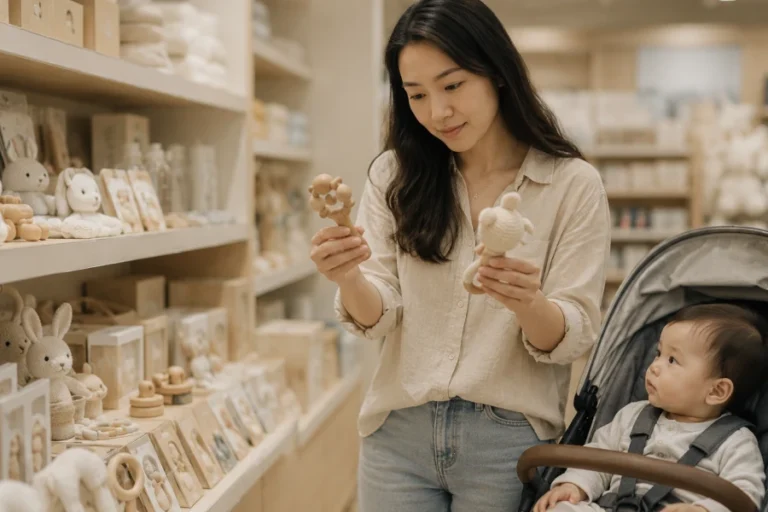
Value means more than low price. A cheap toy that breaks quickly costs more over time. Parents should check safety, durability, and age range. They should consider cleaning needs. Toys that serve multiple stages are especially useful. A stacking set may support many months of growth. Open-ended toys offer longer play life. Batteries can add hidden costs. Simple construction often lasts better. Thoughtful evaluation prevents regret purchases.
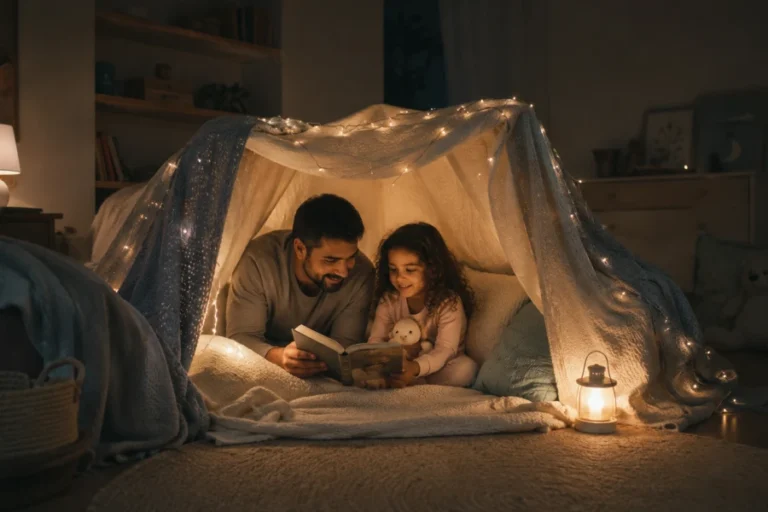
Creative play begins with ordinary curiosity. Babies may turn a box into a tunnel. They may tap safe objects together. Parents can encourage creative baby activities using what already exists at home. Fabric scraps, cups, and soft containers can invite discovery. Safety should always guide selection. Nothing small, sharp, or breakable belongs in baby play. The adult’s presence makes the activity richer. Babies learn through shared attention. Imagination saves money while adding joy.
Families often receive toys from relatives. Parents can guide gift choices gently. A short wish list prevents duplicates. Practical suggestions help loved ones contribute meaningfully. Parents may request classics instead of trendy items. They can also ask for books. Gift rotation keeps new items exciting longer. Duplicate toys can be exchanged when possible. Clear communication reduces waste. Everyone benefits when gifts match real needs.
The goal is not spending as little as possible. The goal is creating joyful play within real limits. Parents deserve freedom from pressure. Babies deserve safe, engaging experiences. Both can happen together. A thoughtful toy shelf supports connection. It also respects the family budget. Play stays flexible and fun. Wonder does not require extravagance. Often, the simplest toy becomes the happiest memory.


Leave a comment