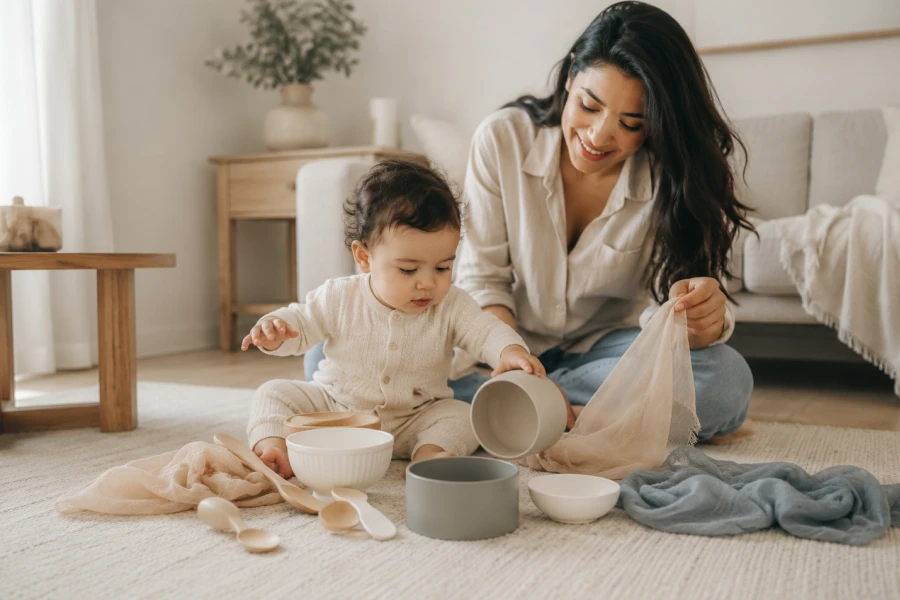
Affordable playtime for babies begins with seeing the home differently. A clean bowl can become a sound experiment. A scarf can become a peekaboo curtain. A cardboard box can become a discovery space. Babies learn through ordinary materials when adults supervise carefully. Parents do not need constant purchases to create joy. They need safe choices and playful attention. Imagination stretches budgets beautifully. It also makes play feel personal. Everyday moments can become meaningful learning opportunities.
Personal play grows from the baby’s interests. Some babies love sound. Others prefer texture or movement. Parents can watch what sparks attention. Then they can build simple activities around it. This creates baby play savings without reducing stimulation. The baby becomes the guide. Parents stop buying blindly. Play feels more responsive. A personal approach often works better than a crowded shelf.
Household objects can support play when chosen safely. Measuring cups can stack and nest. A soft towel can support texture exploration. A sealed container can make gentle sounds. Parents should inspect every object carefully. Nothing should break, shed, or fit inside the mouth. A fun without overspending mindset encourages creativity. Supervision remains central. Simple items can become rich experiences. Babies care about discovery more than labels.
Variety can come from presentation. The same toy feels different on a blanket. It feels different near a mirror. It feels different when paired with music. Parents can change location, texture, or pace. These small shifts renew interest. Babies benefit from repetition too. They learn by doing something again. New does not always mean better. Familiar play often deepens learning.
Changing the time of day for a familiar activity, such as bringing a favorite book outside or introducing a simple song during bath time, can create a new sensory experience. Using different household items, like a wooden spoon and a pot, as instruments can transform a quiet moment into an engaging exploration of sound.
Learning happens through responsive interaction. Parents can narrate what the baby touches. They can pause for sounds and gestures. They can mirror expressions. These moments support early communication. A parent savings strategy should protect time for connection. The adult is the most valuable part of play. Toys simply create opportunities. Babies learn patterns through shared attention. Budget-friendly play can still feel deeply enriching.
Saving money should never compromise safety. Parents should check age recommendations when using purchased toys. Household items require extra caution. Small parts are dangerous. Long strings can create risk. Materials should be clean and sturdy. Supervised play allows more variety. Independent play needs stricter choices. When unsure, parents should choose simpler options. Safety keeps creative play joyful.
Confidence grows when parents realize they already have enough. They can create laughter without overspending. They can support development without constant shopping. This reduces pressure. It also makes play feel more relaxed. Babies respond to that ease. Family routines become lighter. Money worries lose some power. Play becomes an everyday relationship, not a purchase. That confidence supports happier parenting.


Leave a comment